Pie charts

Draft two of the long story is finished and I’ve sent it out to my five beta readers.

I can’t mess about with the words for a while…

Instead I’ve looked at word counts specific to areas of interest/concern and have come up with these pie charts…
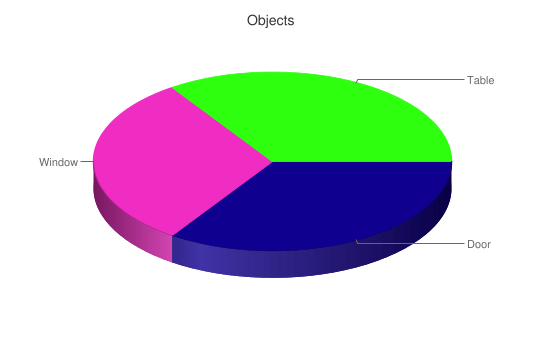
 

objectsThis pie chart (all stats are based on number of references throughout the whole 88,000 words) proved a suspicion to be true.

I use the word door more than any other when referring to things in rooms.

I do a lot of setting up/or describing places and the exit and entrance way seems for me to be a narrative anchor point.

In the next draft I’ll check for necessity. Do we always need to know where the doors are to engage with a scene? Can people already be in the room rather than walking through a door?

Doors just can’t be that interesting…Can they?


Male vs female protagonist

I have dual protagonists and hoped that they were more or less equally name-checked throughout the draft (as this means more or less equal narrative significance).

Hurray they are…

In fact the female character is slightly bulkier, hard to see in this graphic.


Geography


Look at all that sea!  Very good. Its a salty tale.

The sun is boring to write about but sometimes has to be referenced and can’t really be called anything other than the sun.

Sky is sky is sky, glad its the smallest. Its blue. End of.


Verbs of feeling copy


OK lots of love and feeling going on…

Hate can be more entertaining, perhaps a character or two needs to be a bit angrier in the next draft…

Oh hang on…


Verbs of violence copy

Lots of old school thwacking, especially heading towards the climax.

The amount of shooting is a total surprise though, must be threats or reported action…

One to watch…


Swear words

And anglo saxon is the clear winner.

Perhaps by too far a margin.

Some expletive imagination required in the next iteration…


Page 1 2018

write my own rules


Work on draft two of my first serious attempt at long form fiction starts on New Years Day 2018.

I’ve tried to absorb all the helpful prose writing tips I can find.

I’ve scoured the net, picked writer friends’ brains, been to a conference and come up with 6 key rules I want to stick to, both with this long story and the next long story in the pipeline.

In a years time I’ll measure success.

RULE 1

Leave the first draft for two to four weeks before returning to it with a fresh eye.

This was very hard to do but I can see the value in opening up the hard copy for the first time in 21 days, on January 1st.

During this hiatus, plot and character holes have become clear in dreams, while walking and when reading and watching comparative genre fiction and drama.

RULE 2

Write a one page synopsis of the first draft.

I had a rough shape in my head before writing draft 1.

I knew my principal characters, what would happen to them and how the story ended.

I’d sketch notes for each ‘block’ of action (about 4-6 chapters) but didn’t want to be bound to a rigid outline, I needed some creative slack, to go with the flow of my people and places as they appeared.

However immediately post draft 1 writing a synopsis offered a great snapshot of the structure and shone a light on some creaky scaffolding.

The synopsis showed that the arc of the story and the shape (point of attack, rising and falling action, climax and twist) were OK but it also highlighted some character inconsistencies, offered clarity around the themes I’m shooting for and flagged a section which needs cutting.

I can’t wait to make the changes.

RULE 3

Read a lot of books.

I’m currently looking at Paul Auster, Anthony Horowitz, Margaret Atwood and Octavia Butler and a doorstep of contemporary writers in the genre I’m writing in.

RULE 4

Long stories take a long time to write. Keep going.

As a dramatist I white heat the first draft of a play.  Ten days feels like a long time to spend inside two hours of stage time.

It took a year and a half to write this first long story draft. I had other, consuming, work to do.  I had to keep stopping to do the other stuff.  At one point after three months of not writing a word I nearly shelved it, then came to my senses. I won’t do this again.

Write everyday, even if its just twenty words and DO NOT STOP.

RULE 5

Choose beta readers carefully and listen to their collective likes and dislikes.

My five first pairs of outside eyes are lined up ready to read the second draft.

They’re all very different people, men and women with all kinds of reading tastes.

I’ll ask them simply to read and react to the story, in the same way they would if they’d picked up the book at WH Smiths at the airport.

Their idiosyncratic reactions will be interesting and their converging criticisms will be acted on.

I trust them to be honest.

RULE 6

Work at being the best editor you can be.

By the time the long story is ready to send to the next filter, the literary agent, the manuscript needs to read perfectly, contain no spelling or grammar errors, be structurally sound and above all be engaging and compelling to read.

The editor, banished to the back brain on draft 1, will come further and further forward until she has full control.

Wish me luck!


The Silent Approach

Increasingly I’m training directors and playwrights in the Silent Approach.

More and more theatres and producers want to cast actors with learning disabilities in work for general audiences.

The Silent Approach opens up opportunities for vocational actors with learning disabilities to work alongside non learning disabled vocational actors on main stages.

This means people and characters with learning disabilities can be represented more fully on stage.

It also means a dynamic rehearsal process and a richer and deeper theatre experience for everyone.


The Silent Approach is a rehearsal room methodology that grew out of a very clear objective, the need to work with an integrated cast (learning disabled and non-learning disabled actors) in a piece of general audience facing text based drama working to a three week rehearsal period.

The actors I was working with, and continue to work with, had/have Downs Syndrome and other moderate and severe learning disabilities, had limited speech, and weren’t able in most instances either to read or to understand the building blocks of Stanislavskian system (let alone directorial analogy, metaphor or out of moment jokiness).

I was aware that the energy some of my actors had to burn up deconstructing language, when this is a challenge to them, put them at an immediate disadvantage in a rehearsal room.

By removing the need to process all the extraneous explanatory and dead words around the vital words in the text these actors were liberated and so were, and are, we all.


Theatrical realism, working with character in text based drama is hard to reach for actors without access to mainstream training or mainstream directors, or playwrights, like myself, who can frame drama using devices that include learning disabled talent without expecting these actors to have the same kind of technical skills which non learning disabled actors have.

The approach means working physically, removing as much language as possible from the process and as a director shouldering more than usual levels of responsibility for the actors’ journey and an ensemble ethos.

The room is as spare as the process.

The clutter is taken away for everyone, physically and linguistically. It’s all about clarity. Person to person trust and genuine collaboration and the ability/desire to be led by a director, which of course is never guaranteed.


A set of key exercises form the fundamentals of The Silent Approach, physical, vocal and utterly collaborative, an ensemble is formed in a short space of time.

Music, sound, video and visuals support the actors journey through the work, everyone in the room is equal and everyone in the room is engaged to the work.

In a Silent Approach rehearsal room there are no observers, only doers.

Through a series of improvisations and active explorations of the drives in the scene being approached actors embrace character, given circumstances, action and objective and acquire dialogue without using scripts.

The work is accessible to all, no one is excluded from the process and the process belongs to everyone.

Directors and playwrights are learning the techniques, in the hope  that the next generation of vocational actors with learning disabilities will have opportunities to work on the same stages and with the same highly talented collaborating teams as their non learning disabled peers.


Writing warm up

engine

10. Plan, make notes and find images for a time filling and not strictly necessary blog post like this.

9.  Check all email and social media accounts, retweet and post, change profile photos and edit personal info, scour photo albums of people you barely know. Join snapchat.

8. Look at the long range weather forecast in Mexico City.

7. Log out of Google and open the front page of the word document you need to work on, minimise it and open up Google again. Repeat process endlessly reading all breaking news, opinion pieces and comments on all platforms until you fall into a stare unable to open up the word document at all.

6. Turn off your phone. This is it. You are about to write. Turn it on again. False alarm.

5. Go to kitchen and make a pot of leaf tea and eat two unnecessary slices of cheese straight from the fridge. Stare at the rain in the garden.

4. Return to room with desk in.  Try on coats and scarves and look at self in mirror.

3. Tidy desktop and change desktop image, many times, before returning to blank and non distracting screen you had before.

2. Maximise the word document you need to work on. Ignore it, stand up and sing the entire score of My Fair Lady.

1. Write.

inifnity


Debutantes caught in a revolving door


Revolving_Door

Chiffon scarf trapped in the mechanism, in one moment and out the next, always new and never seen before, learning disability in general audience-facing theatre is stuck in debut mode.

Watching Imogen Roberts, Dean Hallisey and Stephanie Newman, all actors trained and supported by Access All Areas theatre in Hackney, interviewed on Channel 4 this week promoting JOY, the production they’re opening at Stratford East Theatre, you’d be forgiven for believing that actors with learning disabilities and/or autism have never appeared in mainstream drama before. The edit of the actors’ interview with Cathy Newman articulated the ‘ground-breaking’ nature of their engagement to a mainstream text based production alongside an emphasis of the actor’s outsider experience and difficulties with bullying and depression.

Lisa Evans ONCE WE WERE MOTHERS, directed by Gwenda Hughes at the New Vic Stoke at the turn of the millennium featured an early central role from Sarah Gordy (Call The Midwife and other leading TV and film roles), Mind The Gap toured Tim Wheelers’ productions OF MICE AND MEN and a raft of text based integrated work to general audiences over a span of two decades, with Dark Horse I wrote, directed and toured HYPOTHERMIA and SING SOMETHING SIMPLE on the mid scale across the UK and Hijinx recently took MEET FRED out nationally with an integrated cast to great success.

Many learning disability theatre focused companies including Access All Areas (who trained the actors in the Channel 4 interview on their course at the Royal Central School of Speech and Drama) and Dark Horse who train actors who want to work professionally have successfully supported actors with learning disabilities to step into general audience facing theatre work for some considerable time.

reinvent-the-wheel

A growing canon of narrative drama exists alongside the handful of accomplished companies and producers championing the development of integrated theatre featuring vocational learning disabled actors.

In fact, contradicting a message from the interview, there’s never been greater opportunity for exceptional learning-disabled actors thanks to the drive of many initiatives, casters and influencers.

That’s not to say there couldn’t and shouldn’t be a whole lot more done to redress the lack of representation but suggesting that progress hasn’t been made at all in training or employment may stall recognition for actors currently doing great work and building CV’s.

In theatre, the readily communicable learning disability ‘coming out’ fairy tale is attractive and has a tendency to parade itself into the foreground, in spite of its sketchy veracity.

Victorian-debutante

Is this why every new theatre production with actors with learning disabilities in the cast is flagged as ground-breaking and why its necessary to forget the history of a small but influential group of companies, directors, playwrights and venues? Some significant pieces of integrated theatre work have been produced over the past thirty years.

Its great that JOY is happening and writer Stephanie Martin, director Melanie Fullbrook and the programmers at Stratford East are to be wholeheartedly congratulated, but isn’t it the case that outside of commercial theatre general audiences are as likely to be attracted by a new take on a story or a brilliant piece of drama as they are by the constituency of the actors in the cast?

Maybe success will equal the day when learning disabled actors cease to be promoted as inspirational success stories (with tough back stories) and instead the work is sold as artistically excellent and as part of a training discipline and artistic continuum that feeds into a bigger ‘whole’, the work itself.


bow 1

Bottom drawer

Definition: The place where a writer stores drafts of work which isn’t ready, didn’t catch fire or anyone elses’ attention and which may be returned to at a miraculous future date which never seems to come.

Here are five from mine….

  1. THE PINK ANIMAL

2d8af1b6d8ab32e91dc1a88fedd8d43d

During the tallships era the depressed Captain Hamilton is lured back to a tropical island by a captivating and mysterious pink animal left on his doorstep in a tea chest in the middle of the night.

Post an eventful sea voyage he’s back on the island which inspired his melancholia and re-discovers his lover Louise who he thought had died but who had instead been captured by rogue pink animals. He frees her. He emancipates the pinks (the non nasty ones, the bad ones get their comeuppance). Happy ending.

Joseph Conrad meets a politically correct Enid Blyton and shares an espresso martini and goat curry pasty. Adventure, fighting, sailors and quirky characters in period costume this novel for 7-10 year olds may become a musical with animatronic characters.

And may not.

2. LET’S PRETEND

b2e02e83b8c22830c88892eef4edd63c--art-children-child-art

The play I half wrote before I wrote another play entirely with the same title because it had already gone to brochure and this one wasn’t working.

An over ambitious piece featuring mistaken identity, burglary and child abduction (not the best thematic choice for a comedy) it strangled itself to death with plot twist bind weed just before the end of act one and has thrashed about in uneasy half life next to the blue tac for over 20 years.

A dark, pretentious and confusing surburban fable playing on fears of loss and exploring greed and status, in need of far superior craft and care than that evidenced up to the point where I gave up and did something else instead.

Perhaps when old enough to have any idea at all of the central characters I’ve written I’ll give it another shot or it may just lie permanently in the folder marked ‘too clever for its own good’.

Or be burned, this may be best.

3. JOANNA THE MAD

Juan_de_Flandes_003

Historical stage drama, jam packed with ambassadors and trumpets and castle battlements and paranoid  schizophrenia.

Joanna La Loca climbed the curtains and ended her days incarcerated in a nunnery, its a great role and a great story, so great that another writer and company beat me to production but hey we can never have too many epic dramas featuring powerful women can we?

Nearer the front this one, next to the Polos.

4. DREAM KITCHEN

family+dinner

A commissioned sit com pilot for a series which never got made about a family with a gadget fetish.

Quirky, three gags a page, about aquisition and definition through objects without stating this in any way which meant anyone would understand it to be in any way about that, obscure and vaguely charming.

Comedy ages badly. Funny then. Not now. Birdcage or litter tray lining.

5. BLISS

punk-as-fuck-carissa-rose-stevens

Or ignorance. You decide!  Yeah! Whatevs!

Play for radio. Girl next door gets accelerated into superstardom via a TV talent show. Fame followed by destruction followed by spiritual awakening followed by loss of faith followed by a return to base.

Unoriginal rock myth given uplift by virtue (possibly) of entirely made up vocabulary/language which made for an interesting exercise but a suspiciously odd read and probably a very hard listen.

In the drawer for a reason.

Whats in yours?


Sketch

IMG_2688

…Doodling ideas in anticipation of the pre rehearsal draft of A MAN WITH DOWNS SYNDROME TALKS ABOUT LOVE AND TELLS A STORY, with apologies to designer Pip Leckenby who will ultimately interpret and wave her far superior visual wand over the story.

Its a writing thing…

I find it helpful at this point to have an idea of how the play might work in a theatre space, or spaces of various sizes and shapes, as is the case with a tour.

In the later stages of crafting a play for an audience, the ‘wrighting’ (manipulating the emotional centre of the characters and the plot) happens in tandem with the pragmatics of space and time.

Having a really bad drawing to refer to actually helps…


Have a word theatre

30274
A really interesting diagram about words


Pressed at an event, a well known theatre director isolated ‘class’ as a possible driver behind his premature departure from a high profile post.

An inability to understand a Latin word used during a board meeting marked his card, denoted his rank and, he suggested, may have started a process which led to the door.

A producer, known for excellent work in promoting diversity and with a desire to represent people with learning disabilities, posited casting actors with mild learning disabilities .

‘Learning disability lite’ as she put it, meant minimal or no adjustments to text or issues with on set communication but meant she was still ‘ticking the box’ by ‘cheating a bit’.

An award winning actor with a non R.P. accent, waits for a resurgence in Irish writing on the London stage to secure employment, knowing that casting directors won’t see her for roles unless they are specific to her dialect.

Is it time to break the tyranny of words and language in theatre?


“Every word is like an unnecessary stain on silence and nothingness.”

Samuel Beckett


The Silent Approach offers a route into accessible, universal theatre for playwrights, directors and actors,  making work which includes the talents of actors who aren’t verbal or cognitively usual and mines a rich seam of story telling offered by exploring characters and worlds invisible.

If words create hierarchies of sound and language then why not leave them at the door?

No theatre maker I know works to a process where one collaborator is afforded more artistic value than another but we let the language we use and the way it sounds determine status.

A highly accomplished verbal athlete working the most complex of text needs another actor to listen to him, both actors are in the scene, one can’t exist without the other.


“After silence, that which comes nearest to expressing the inexpressible is music.”

Aldous Huxley


For many years Arts Council England has encouraged board diversification for theatre companies and although progress has been made there’s still some way to go.

Formal language can act as a major barrier to the advancement of individuals not versed in the (usually archaic) lingo of the board.

How about re-thinking governance, aiming for accessible language and removing linguistic signifiers constructed to seek out and define social status?


“Silence is so accurate.” 

Mark Rothko


And finally, must all roles be cast according to an idea of acceptable accent?

We’re all accustomed to bumping into people from all over the UK and all over the world in many different contexts.

Its dramatically unnecessary to explain why the guy running the corner shop is Welsh when the soap is set in Newcastle or why a character in the Cherry Orchard has a Ghanaian accent (Does everyone else sound like Putin? No).

Can we give actors a break and move our imaginations in tandem with their talents?

The world may suddenly look a lot more interesting, and realistic, on stage.

language difficulty and diversity
Some languages and how long on average it takes to learn them (as a non native speaker)


Ten tips for theatre makers

thrust

1. Collect data.

1

Aside from evidencing everything you do, numbers of creatives, participants, audience etc. related factoids and statistics from trade papers, general media and specialist organisations can be helpful. 

Its neither interesting to write about nor fun to do but nothing values your proposed work better than a clear need for it evidenced by a percentage.


2. Compare and contrast

2

Learn about the work of peers in your field, make friends, have coffee, share experiences, tips, support and mutual respect.

You can then ensure that all of your planning and output clearly defines your differences and flags your USP. 


3. Make facetime meetings

3

Being in the same real world space with another human being is invaluable, theatre is a people-focused creative process and the dynamics between people at each point in the journey to the work inform the work itself.

4. Learn to predict

Design Buch von Condé Nast International für Mercedes-Benz

It takes a long time for any theatre project to reach the stage. Content is anticipated months or years before its delivered.  Research current and upcoming productions for trends, consider the world and politics and anticipate, as best you can, the space your target human psyche is likely to inhabit at this future time.

You can then generate work appropriate for this imagined future.


5. Chase the dream, not the funding

5

Projects cost what they cost to realise.  Hitting a figure because its available reads to a funder like hitting a figure because its available.  It needs to feel important and stimulating enough to do without any money being involved at all.

Its art, not a transaction.


6. Know the difference between persistence and being a pest


6

Not everyone wants to work with you. Read the signals. Stop just before someone is likely to give you a definite ‘No’. Keep doors open for next time.  Don’t be irritating. Radiate happiness and positivity.  

You’re privileged to be doing something you love as your job, most people aren’t.


7. Expect timelines to stretch

7c

Time gives air and space to projects, new collaborations form and artistic content gets richer.  Fight any urge to do anything quickly and relish time taken thinking strategically, its never wasted.


8. Offer something

8

In kind contributions and cash investments are of great value to projects, clarity about what you’re offering and what value you’re bringing in return is vital.

Your theatre work has to give something useful, enriching and unique, know exactly what it is and be ready to make that case.


9. Review sent and received email

The Letter

There may be a positive response you’ve forgotten, an invitation to be ‘updated’ or an email you sent which was never replied to which warrants a follow up.

Your future may lie in your past.


10 .Embrace the long term view

longview1

None of it is now, its all tomorrow and beyond.